
Case Management
The Real Cost of Missed Deadlines in Immigration Cases (And How to Prevent Them)
January 27, 2026Read
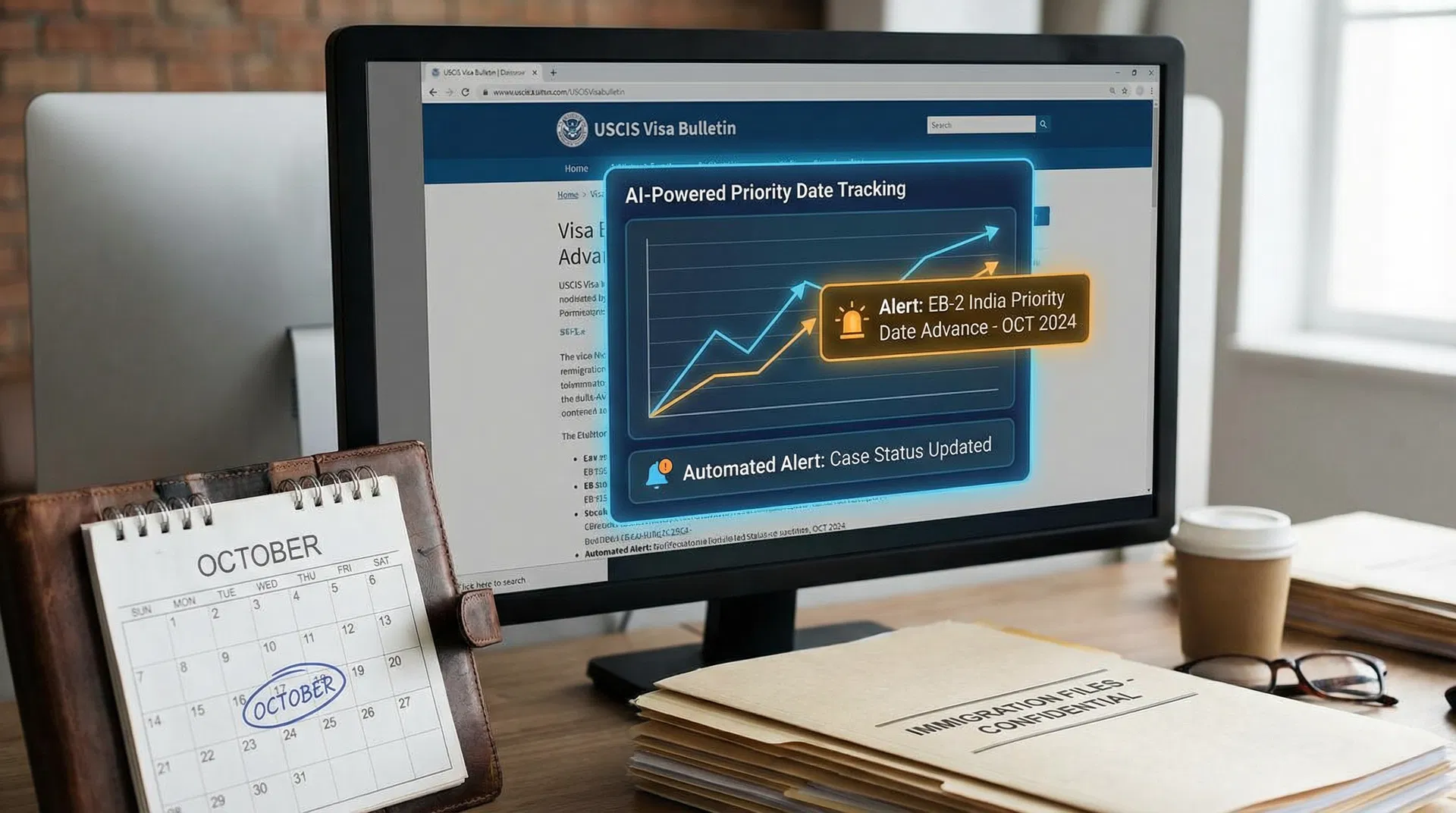
The U.S. immigration system is notoriously complex, with constantly shifting regulations and lengthy processing times. For immigration law firms, staying abreast of these changes, particularly the monthly fluctuations of the Visa Bulletin and the critical importance of priority dates, is not just good practice—it's essential for client success and firm efficiency. Manual tracking of these elements is a time-consuming, error-prone endeavor that can lead to missed opportunities, client frustration, and even professional liability. This is where artificial intelligence (AI) tools are revolutionizing how law firms manage these vital aspects of immigration practice.
Immigration attorneys and their teams spend countless hours each month poring over the Department of State's Visa Bulletin. This document dictates visa availability for various preference categories and countries, directly impacting when clients can file their adjustment of status applications or receive their immigrant visas. Understanding the movement of 'cut-off dates' and how they affect a client's 'priority date' requires meticulous attention to detail and a deep understanding of immigration law. The consequences of misinterpreting the Visa Bulletin or failing to monitor a priority date can be severe, ranging from delayed filings to the expiration of a client's eligibility.
Furthermore, the sheer volume of cases handled by many firms makes individual client monitoring a daunting task. Each client has a unique priority date, and tracking these against the monthly Visa Bulletin updates for multiple categories (e.g., F1, F2A, F2B, F3, F4, EB1, EB2, EB3) and dozens of countries is a logistical nightmare. This manual process is not only inefficient but also diverts valuable attorney time away from higher-value legal work and client consultation. The risk of human error, such as overlooking a favorable cut-off date or failing to notify a client promptly, is ever-present and can have significant repercussions for both the client and the firm. For more insights into the financial impact of such errors, consider reading about the real cost of missed deadlines in immigration.
AI-powered tools offer a robust solution to these challenges, transforming a laborious manual process into an automated, precise, and proactive system. These tools leverage advanced algorithms to analyze the monthly Visa Bulletin, compare it against client priority dates, and provide real-time alerts and actionable insights. The core benefit lies in their ability to process vast amounts of data quickly and accurately, far surpassing human capabilities.
One of the primary ways AI assists is through automated data extraction and analysis. Instead of manually reviewing PDF documents, AI systems can instantly parse the Visa Bulletin, identify relevant cut-off dates, and categorize them by preference and country. This data is then cross-referenced with the firm's client database, where each client's priority date is stored. The system can then automatically identify which clients' priority dates have become current or are projected to become current in the near future. This proactive approach allows firms to prepare applications well in advance, ensuring no filing window is missed.
Another crucial feature is predictive analytics. While not foolproof, some AI tools can analyze historical Visa Bulletin trends to offer informed projections about future movements. This capability allows firms to set client expectations more realistically and strategize future filings with greater foresight. For a deeper dive into how predictive analytics can benefit immigration law, explore our article on predictive analytics in immigration law.
Modern AI visa bulletin tracking software integrates several features designed to streamline operations and enhance client service:
When selecting an AI solution for visa bulletin tracking and priority date monitoring, immigration law firms should consider several factors. The software should be intuitive, integrate seamlessly with existing case management systems, and offer robust security features to protect sensitive client data. Scalability is also key, as the solution should be able to grow with the firm's increasing caseload.
Furthermore, look for platforms that offer comprehensive compliance monitoring capabilities. This ensures that your firm is not only tracking dates but also staying updated on the ever-evolving landscape of immigration regulations. The ability to automatically detect new form versions and validate fields, as offered by features like Dynamic USCIS Form Versioning, is invaluable in preventing errors and RFEs. For more on reducing errors, see our article on document automation reduces filing errors.
The era of manual, error-prone visa bulletin tracking and priority date monitoring is rapidly drawing to a close. AI tools are providing immigration law firms with an unprecedented level of efficiency, accuracy, and proactive client management. By automating these critical processes, attorneys can reclaim valuable time, reduce the risk of costly errors, and ultimately deliver superior service to their clients. Embracing these technological advancements is no longer a luxury but a necessity for firms aiming to thrive in the competitive and complex world of U.S. immigration law.
To explore how AI can streamline your firm's compliance monitoring and case management, visit legistai.com and discover features like automated USCIS case status tracking and dynamic form versioning that can transform your practice.